AI search
The 10 Best AI Search Visibility Tools, Compared
A neutral comparison of 10 AI search visibility tools for ChatGPT, Gemini, Perplexity and AI Overviews: engines covered, pricing, accuracy and fit.
By the gtmind teamPublished 12 min read
AI search visibility tools track how often ChatGPT, Gemini, Perplexity, Claude, Copilot and Google AI Overviews mention your brand or cite your pages. They run a set of prompts on a schedule, record each answer, and report mentions, citations, share of voice against competitors, and sentiment. They measure presence in AI answers, not revenue.
Key takeaways
- Every tool here works the same way at its core: it samples prompts and counts how often you appear. The differences are engine coverage, prompt volume, and what the tool helps you do next.
- Numbers disagree between tools because AI answers are unstable. Use them for trends and competitor comparison, not absolute truth.
- Entry prices range from free (one-off checks) to about $400 a month for self-serve plans, with enterprise tiers priced on request.
- Google Search Console and Bing Webmaster Tools now report AI visibility directly, for free. Start there.
- A dashboard doesn't move anything. The value comes from turning gaps into pages and tying citations to pipeline.
A note on neutrality: we're not an AI visibility tracker and have no affiliate relationship with any tool listed. Prices and engine coverage were checked on each vendor's own site in September 2026. This category changes monthly, so check before you buy.
What does an AI visibility tool measure?
AI visibility is the share of relevant AI answers in which your brand appears. Most trackers break it into five metrics:
- Mentions. Your brand name appears in the answer text, with or without a link.
- Citations. One of your URLs is linked as a source. This is what drives referral traffic.
- Share of voice. Your mentions as a share of all brand mentions across the prompt set, compared with named competitors.
- Position. Where you appear in a list answer. Useful for a rough signal, unreliable on its own (more on this below).
- Sentiment. Whether the answer describes you positively, neutrally or negatively, and which claims it makes.
Better tools add source analysis: which third-party pages (Reddit threads, review sites, listicles) the engines cite when they answer prompts in your category. That tells you where to earn mentions, not just how often you appear.
What about AI Overview tracking?
AI Overview tracking is a narrower version of the same idea, focused on Google. You can now get part of it for free. Search Console's generative AI performance report shows impressions in AI Overviews and AI Mode by page, country, date and device. It shows impressions only and has no query dimension, so it tells you which pages appear but not for which questions. Paid trackers fill that gap by running your prompts and recording the Overview itself.
Microsoft offers the equivalent for Copilot. The AI Performance report in Bing Webmaster Tools shows total citations, cited pages and the grounding queries Copilot used to find them.
Why do AI visibility tools disagree with each other?
Put the same brand into two trackers and you will get two different visibility scores. That's not necessarily a bug. It follows from how AI answers work.
Answers are non-deterministic. Ask the same question twice and you get a different answer. SparkToro and Gumshoe had volunteers run identical prompts through ChatGPT, Claude and Google's AI thousands of times and found the odds of getting the same brand list twice were under 1 in 100, and the same list in the same order closer to 1 in 1,000. Rand Fishkin's conclusion was that how often a brand appears across many runs is a steadier metric than its "rank."
Prompt sets differ. One tool generates prompts from your keywords, another from an industry database, a third lets you write your own. Ahrefs builds its index from hundreds of millions of monthly prompts derived from its keyword database; a self-serve tracker might run your 50 custom prompts. Different questions give different answers.
Collection method differs. Some tools query model APIs, others scrape the consumer interface. Peec AI, for example, says it uses UI scraping rather than APIs to reflect what real users see. API answers and app answers are not always the same.
Context differs. Location, language, logged-in state, memory and personalization all change what a real user sees. Trackers usually run from clean sessions in chosen countries.
Sampling frequency differs. A prompt run once a day gives a noisier picture than one run many times a day.
The practical rule: pick one tool, keep the prompt set stable, and compare yourself against competitors inside that tool. Trends and relative share are meaningful. A single absolute score is not.
How to evaluate AI search visibility tools
We compared the ten tools on six criteria. Weight them by your situation. No tool wins on all six, which is why this list isn't ranked.
- Engine coverage. Which answer engines are included in the base price, and which cost extra? At minimum, most B2B teams want ChatGPT, Google AI Overviews, Gemini and Perplexity.
- Prompt volume and control. How many prompts can you track, and can you write your own, split them by persona, market or country?
- Citation and source detail. Does it show which URLs are cited, yours and third parties'?
- Price transparency. Is there a public self-serve plan, or is it demo-only?
- Actionability. Does it only report, or does it suggest or produce content changes? Does it audit your pages for AI crawlability?
- Data access. API, exports and integrations, so you can join visibility data with analytics and CRM.
AI search visibility tools compared
Prices are the lowest listed paid tier, monthly billing unless noted, as of September 2026. "Base engines" means included at the entry tier; most tools add more engines on higher plans or as add-ons.
| Tool | Base engines (entry tier) | Entry price | Free option | Best fit |
|---|---|---|---|---|
| Profound | ChatGPT, Gemini, AI Overviews (trial); 9 on Enterprise | Pricing on request | 7-day trial | Enterprise brands |
| Peec AI | 3 models of your choice | $95/mo | No | Marketing teams wanting clean reporting |
| Scrunch | ChatGPT, Claude, Gemini, Perplexity, AI Mode, AI Overviews, Meta | $300/mo | No | Teams that also want an AI-friendly site layer |
| Otterly.AI | ChatGPT, AI Overviews, Perplexity, Copilot | $29/mo | No | Small teams on a budget |
| AthenaHQ | ChatGPT, Perplexity, AI Overviews, Gemini, Copilot | $295/mo | Free tier with credits | Teams wanting built-in optimization agents |
| Ahrefs Brand Radar | AI Overviews, Gemini, Perplexity, ChatGPT, Copilot | From $50/mo (custom prompts) | Included with paid Ahrefs plans | Existing Ahrefs users |
| Semrush AI Visibility Toolkit | ChatGPT, Google AI, Gemini, Perplexity | $99/mo (billed annually) | Free checker, 3/day | Existing Semrush users |
| SE Visible | ChatGPT, AI Mode, Gemini, Perplexity, AI Overviews | $99/mo | No | Agencies and SEO teams wanting prompt volume |
| Goodie | 5 models on Core | $399/mo | 7-day trial | Brands, including ecommerce |
| HubSpot AI Search Grader | ChatGPT, Perplexity, Gemini | Free | One-off check | A quick baseline |
Short reviews of each tool
Profound
Profound is the most widely cited name in the category and is aimed at enterprise teams. Its pricing page lists a free 7-day trial that runs 50 prompts a day across ChatGPT, Gemini and Google AI Overviews, using recommended prompts you can't customize. The Enterprise plan covers ChatGPT, Perplexity, Google AI Mode, Gemini, Microsoft Copilot, DeepSeek, Claude, AI Overviews and Exa Search, with pricing on request. It also sells agents on a credit system.
Choose it if you're a large brand that needs broad engine coverage and has budget for an enterprise contract. Look elsewhere if you want to self-serve or start small, which is the usual reason people search for Profound alternatives.
Peec AI
Peec AI is a tracker focused on clear reporting of visibility, position, sentiment and share of voice. According to Peec's own published plan details, Starter is $95 a month (as of September 2026) for 50 prompts, Pro $245 for 150 prompts and Advanced $495 for 350 prompts, each with 3 models of your choice. More models are available as upgrades, and Enterprise is priced on request. Some regions see euro pricing on the pricing page. It covers 80+ countries and collects answers by scraping the consumer interface.
Choose it if you want straightforward dashboards and competitor benchmarking at a mid-market price. Watch the three-model limit on lower tiers if you need broad coverage.
Scrunch
Scrunch combines monitoring with what it calls an Agent Experience Platform (AXP), which generates an AI-friendly version of your site for AI crawlers and agents. Starter is $300 a month billed monthly, or $250 a month billed annually (as of September 2026), and includes 350 custom prompts, 3 personas and page audits. Growth is $500 monthly. All plans cover ChatGPT, Claude, Gemini, Perplexity, Google AI Mode, AI Overviews and Meta AI, and include agent traffic monitoring.
Choose it if you want monitoring and a technical fix for AI crawler readability in one product. Consider whether you'd rather fix rendering in your own stack, which we cover in our LLM SEO playbook.
Otterly.AI
Otterly has the lowest paid entry point in this list. Lite is $29 a month (as of September 2026) for 15 prompts across ChatGPT, Google AI Overviews, Perplexity and Microsoft Copilot, with unlimited team members and daily tracking. Standard is $189 a month for 100 prompts and adds API access and GEO URL audits. Google AI Mode, Gemini and Claude are paid add-ons.
Choose it if you're a small team or a founder who wants real tracking without a large commitment. Watch the add-on costs if you need Gemini or Claude.
AthenaHQ
AthenaHQ pairs tracking with optimization agents and content recommendations. It has a free Essential tier with starter credits covering ChatGPT, Perplexity, AI Overviews, Gemini and Copilot. The Starter plan is $295 a month (as of September 2026) with 3,600 monthly credits and expands coverage to 11 models, including Claude, Grok, DeepSeek, Meta AI and Mistral. Enterprise is priced on request.
Choose it if you want suggestions for what to change, not only a report. Note that a credit-based model makes costs depend on how much you run.
Ahrefs Brand Radar
Brand Radar takes a different approach from most trackers. Instead of only running your prompts, it maintains an index of AI answers built from Ahrefs' keyword database: over 449 million monthly prompts across AI Overviews, Gemini, Perplexity, ChatGPT and Copilot, with Claude for enterprise users. Custom prompt tracking starts at $50 a month and is included with paid Ahrefs plans from Lite up. The full AI Visibility Index is a $199-a-month add-on (as of September 2026).
Choose it if your team already lives in Ahrefs and wants market-level visibility data next to backlinks and keywords. Its strength is breadth of the prompt sample rather than depth on a few prompts.
Semrush AI Visibility Toolkit
Semrush's AI visibility product is the AI Visibility Toolkit. It costs $99 a month per domain, billed annually (as of September 2026) and includes AI visibility reports for any domain, 25 custom prompts tracked daily, competitor analysis, prompt research and an AI-readiness site audit. It reports mentions from ChatGPT, Google AI, Gemini and Perplexity. Semrush also offers a free AI visibility checker limited to three uses a day with no account.
Choose it if you already use Semrush and want AI visibility in the same place. Watch the 25-prompt limit on the base plan.
SE Visible (SE Ranking)
SE Visible is SE Ranking's standalone AI visibility product. It tracks ChatGPT, Google AI Mode, Gemini, Perplexity and AI Overviews on all plans, with Claude listed as coming. Basic is $99 a month (as of September 2026) for 200 prompts and 3 projects; Core is $189 for 450 prompts; Plus is $355 for 1,000 prompts. Annual billing is 20% cheaper.
Choose it if you want the most prompts per dollar among the self-serve tools here, especially for agency or multi-brand work.
Goodie
Goodie pairs tracking with a monthly allowance of optimizations. Core is $399 a month (as of September 2026) for 5 AI models and 120 prompts, with a 7-day trial and strategist support. Pro is $999 a month for 8 models and 250 prompts, and adds SKU-level agentic commerce visibility. Enterprise covers up to 13 engines, including Amazon Alexa for Shopping.
Choose it if you're a brand, particularly in ecommerce, that wants tracking plus hands-on help. It's the priciest self-serve entry point in this comparison.
A free option: HubSpot AI Search Grader (plus the platforms' own reports)
HubSpot's AI Search Grader is free, needs no account and takes a couple of minutes. It asks ChatGPT, Perplexity and Gemini how they see your brand and scores sentiment, presence quality, brand recognition, share of voice and market competition. It's a one-time snapshot based largely on what the models know, not ongoing prompt tracking. HubSpot sells ongoing tracking separately.
Pair it with the two free first-party reports: Search Console's generative AI report for AI Overviews and AI Mode impressions, and Bing's AI Performance report for Copilot citations. Together they cost nothing and cover more than most teams look at today.
Choose this if you're establishing a baseline before paying for anything.
Which AI visibility tool should you choose?
Rather than a single "best," match the tool to your situation:
| If you are… | Start with | Why |
|---|---|---|
| A founder or small team | Free reports + HubSpot Grader, then Otterly | Baseline for $0, real tracking for $29 |
| An SEO team already on Ahrefs or Semrush | Brand Radar or AI Visibility Toolkit | No new vendor, data next to keywords |
| An agency tracking many brands | SE Visible or Peec AI | Prompt volume and projects per dollar |
| A team that wants suggestions, not just reports | AthenaHQ or Scrunch | Built-in optimization features |
| An enterprise brand | Profound, Scrunch or Goodie enterprise tiers | Broad engine coverage and support |
Whichever you choose, start with a small prompt set you can act on. Fifty prompts you'll actually respond to are worth more than a thousand you'll only report.
How to track brand mentions in ChatGPT (without a tool)
If you're not ready to pay, you can track ChatGPT visibility by hand:
- Write 20–30 prompts your buyers ask, split into problem, category and brand questions.
- Run each prompt 3–5 times in a clean, logged-out session. Record whether you're mentioned, whether you're cited, and which competitors appear.
- Log the cited URLs, yours and third parties'. Those sources are your outreach list.
- Check GA4 for referrals. ChatGPT search adds
utm_source=chatgpt.comto outbound links, so you can see which cited pages actually send visits. - Repeat monthly with the same prompts.
This is slow, but it teaches you how answers in your category behave before you buy a tool, which makes you a much better buyer.
After the dashboard: turning visibility gaps into pages
This is the part none of the vendor listicles cover, because it's not what their tools sell. A visibility score going from 18% to 24% is not a business result. Here's how to turn the data into one.
1. Sort gaps by commercial intent. A prompt like "best marketing attribution software for B2B" is worth more than "what is attribution." Rank lost prompts by how close they sit to a purchase.
2. Read the sources the engines cite instead of you. If ChatGPT cites a competitor's comparison page and two Reddit threads, you know what to build and where to participate.
3. Build or fix the page that should win. Usually that means a comparison page, a pricing explainer or a use-case page, written answer-first with a table and a dated update line. Our LLM SEO playbook covers the structure, and the crawler checks that come before it.
4. Check that AI crawlers can read it. Several tools here include page audits for this. A page that renders only in JavaScript won't be cited no matter how good it is.
5. Tie citations to pipeline. Track AI-referred sessions by landing page in GA4, carry the source onto the lead, and follow it into the CRM. Then report visibility as a leading indicator underneath pipeline, not as the headline number. Our guide to SEO KPIs lays out that hierarchy.
This is where gtmind sits, and it's worth being plain about what it is and isn't. gtmind is not a prompt tracker and doesn't replace the tools above. It's a GTM brain: it joins Search Console, GA4 and your CRM into one model and prices each finding against your own closed-won deals. Its GEO agent watches ChatGPT, Gemini, Perplexity and AI Overviews and drafts the pages that get cited, with every change reviewed and reversible. It fits the same family as the AI marketing agents that act on data rather than only report it.
An illustrative example of the kind of play that joined data surfaces: a tracker shows you're absent from answers to a "vs competitor" prompt. On its own, that's one gap among hundreds. Joined with CRM data, it turns out deals where buyers had visited your existing comparison page closed at a higher rate than average. That moves the refresh of that page to the top of the list, with a dollar estimate attached, ahead of higher-volume prompts with no revenue history behind them.
Final word
AI search visibility tools are useful instruments with honest limits. They sample an unstable system, so read them as trends. Match the tool to your team size, stack and engines, start with the free first-party reports, and judge any tool by whether it helps you ship the next page, not by how impressive the dashboard looks.
Frequently asked questions
How do I track my brand in ChatGPT?
Write 30 to 100 prompts your buyers actually ask, then run them repeatedly in ChatGPT and record whether your brand is mentioned or your pages are cited. A tracker such as Otterly, Peec AI or SE Visible automates the runs. In GA4, ChatGPT search referrals carry utm_source=chatgpt.com, so you can also see which cited pages send visits and follow those sessions into your CRM.
Are AI visibility tools accurate?
They are accurate about what they sampled, not about what every user sees. AI answers vary between runs, users, locations and logged-in states. SparkToro found the odds of an AI giving the same brand list twice are under 1 in 100. Treat a tool's numbers as a trend across many runs, compare yourself against competitors inside the same tool, and avoid reading much into a single position.
What's the best free AI visibility tool?
For a one-off snapshot, HubSpot's AI Search Grader is free with no account and checks ChatGPT, Perplexity and Gemini. Semrush's free checker allows three lookups a day. For ongoing data about your own pages, Bing Webmaster Tools' AI Performance report and Google Search Console's generative AI report are free and come straight from the platforms.
What are the best Profound alternatives?
It depends on why you're looking. For a lower entry price with self-serve plans, Otterly, Peec AI and SE Visible start between roughly $29 and $99 a month. If your team already pays for Ahrefs or Semrush, their AI visibility add-ons avoid another vendor. For enterprise coverage with optimization features, Scrunch, AthenaHQ and Goodie are the closest comparisons.
Keep reading
AI search
LLM SEO: How to Get Your Brand Cited in AI Answers
LLM SEO gets your pages cited in ChatGPT, Gemini, Perplexity and AI Overviews. A five-step playbook, from crawler access to tying citations to pipeline.
13 min read
Revenue measurement
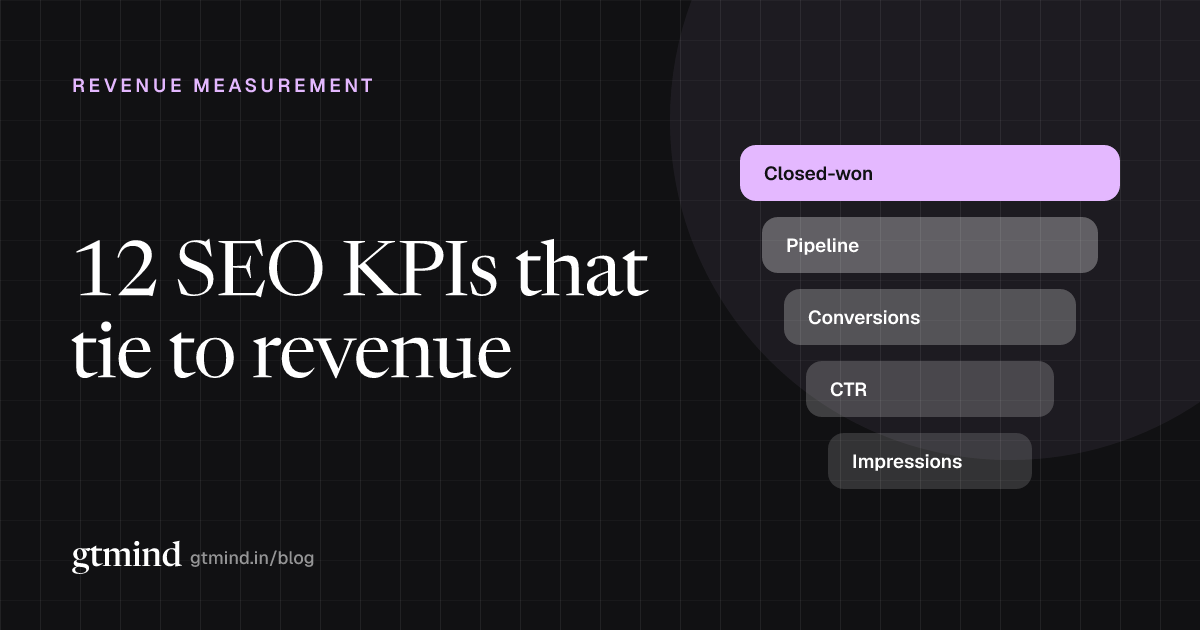
12 SEO KPIs That Actually Tie to Revenue
Most SEO KPI lists are flat. This one is a ladder: 12 metrics from impressions to closed-won, each with a formula, a data source, a target and a dashboard layout to report them.
9 min read
AI agents
AI Marketing Agents: What They Do, 10 Examples, and How to Choose One
AI marketing agents read your data, decide what to do, act and check the result. Here are 10 examples organized by job, the platforms that offer them, and the guardrails to insist on.
11 min read